Air Freight vs. Sea Freight: Which is Right for Your Business?
In the world of international trade, one of the most important decisions a business must make is choosing the right mode of transportation for their goods. For exporters and importers, the two most common methods are air freight and sea freight. Each offers unique advantages and limitations, and the right choice depends on a range of factors including cost, speed, cargo type, destination, and overall logistics strategy.
At Trident International, we help clients make informed decisions by evaluating their business needs and recommending the most suitable freight option. In this blog, we dive deep into the comparison between air freight and sea freight, so you can choose the one that fits your business best.
What is Air Freight?
Air freight refers to the shipment of goods via aircraft. It is the fastest mode of transport and is ideal for time-sensitive, high-value, or perishable items. Goods are typically transported through commercial passenger airlines or dedicated cargo planes.
What is Sea Freight?
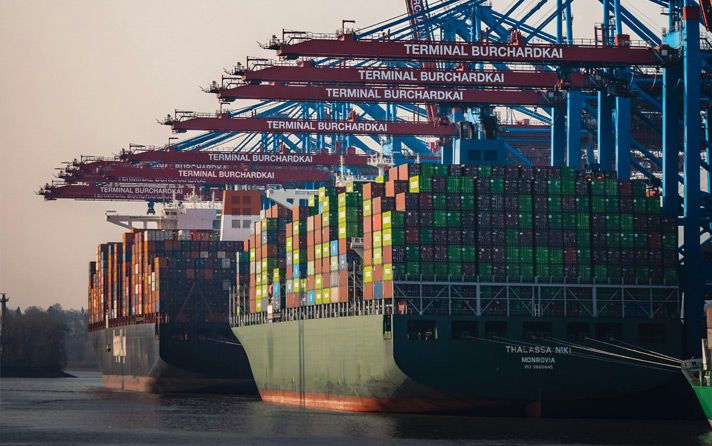
Sea freight, also known as ocean freight, involves shipping goods in containers over water via cargo ships. It is best suited for large, heavy, or non-urgent shipments and is generally more economical than air freight, especially for bulk cargo.
Air Freight vs. Sea Freight: Key Comparisons
1. Transit Time
- Air Freight: Offers significantly faster delivery, usually within 1 to 7 days depending on the route.
- Sea Freight: Much slower; delivery can take 15 to 45 days depending on the destination and shipping schedule.
If speed is critical (e.g., for seasonal goods or urgent replenishment), air freight is the clear winner.
2. Cost
- Air Freight: Generally more expensive. Charges are based on chargeable weight, which considers both weight and volume.
- Sea Freight: More cost-effective for large and heavy shipments. Charges are based on container size (FCL or LCL).
If your shipment is high volume and not urgently needed, sea freight provides significant cost savings.
3. Cargo Type
- Air Freight: Ideal for light, high-value, or perishable items like electronics, pharmaceuticals, and fashion goods.
- Sea Freight: Better suited for bulky, heavy, or durable goods such as raw materials, machinery, furniture, or industrial parts.
Hazardous or temperature-sensitive goods may have special restrictions in both modes.
4. Reliability
- Air Freight: More reliable in terms of scheduled departures and arrivals. Less affected by weather or port congestion.
- Sea Freight: Vulnerable to delays due to bad weather, port strikes, customs clearance issues, or slow vessel movement.
However, sea freight has improved significantly with digital tracking and better route planning.
5. Environmental Impact
- Air Freight: Higher carbon footprint due to fuel consumption and emissions.
- Sea Freight: More environmentally friendly on a per-ton basis, especially for long-distance, large-volume transport.
For companies focused on sustainability, sea freight may align better with green goals.
6. Documentation & Customs
Both modes require detailed documentation, but air freight typically has simpler, faster customs clearance due to digital processing. Sea freight involves more paperwork, especially for LCL (Less-than-Container Load) shipments that are shared with other cargo.
When to Choose Air Freight
- Your goods are urgently needed or time-sensitive
- You are shipping high-value, small-volume items
- You want minimal risk of delays
- You have the budget for faster service
- You need to meet tight delivery timelines, such as product launches or promotional events
When to Choose Sea Freight
- You are shipping in bulk or full containers
- Your cargo is heavy, large, or non-perishable
- Cost-saving is a priority
- Delivery timelines are flexible
- You want to reduce environmental impact
Trident International’s Freight Solutions
At Trident International, we provide end-to-end air and sea freight services that are tailored to meet your timeline, budget, and cargo requirements. Whether you need a quick air freight solution for a product launch or a cost-effective sea freight plan for bulk materials, we:
- Offer competitive rates through our global freight network
- Manage all documentation, customs clearance, and port handling
- Track your shipments in real time
- Ensure compliance with international shipping laws
- Advise on packaging, labeling, and cargo insurance
We believe the best logistics strategy is one that’s flexible. In some cases, a hybrid approach using both air and sea freight may offer the best of both worlds. For example, urgent samples can be sent by air while the full order follows by sea.